Quick Summary
Daily yoga reduce cortisol levels by calming the nervous system, reducing stress, and promoting relaxation.
Cortisol is the body’s primary stress hormone, and when it remains elevated for long periods, it can contribute to anxiety, poor sleep, fatigue, and weight gain.
Gentle yoga poses such as Child’s Pose, Legs-Up-The-Wall, Savasana, Cat-Cow Stretch, Standing Forward Fold, and Reclining Butterfly Pose can support cortisol reduction.
A simple 15-minute daily routine, combined with consistent practice and proper breathing, may improve stress resilience, sleep quality, mood, and overall well-being over time.
Key Takeaways
a. Daily yoga may help lower cortisol levels by calming the nervous system and reducing the body’s stress response.
b. Just 15 minutes of consistent practice each day can support better stress management, sleep, and overall well-being.
c. Gentle poses like Child’s Pose, Legs-Up-The-Wall, and Savasana are especially effective for relaxation and cortisol reduction.
d. Deep breathing is a key part of yoga and helps activate the body’s “rest and digest” mode.
e. Consistency matters more than intensity. A short daily practice is often more beneficial than occasional long sessions.
Introduction
In today’s fast-paced world, stress has become so common that many people consider it a normal part of life.
Yet from both a yogic and Ayurvedic perspective, constant stress is a sign that the mind and body have drifted away from their natural state of balance.
Modern science often points to cortisol, the body’s primary stress hormone, as a key player in this process.
While cortisol is essential for survival, persistently elevated levels can affect sleep, mood, digestion, immunity, and emotional well-being.
Yoga offers a time-tested approach to restoring balance.
More than a physical exercise, yoga combines mindful movement, conscious breathing, and mental awareness to regulate the nervous system and cultivate inner calm.
Ayurveda complements this understanding by viewing chronic stress as an imbalance that disturbs the body’s natural intelligence and weakens vitality.
So, can daily yoga reduce cortisol levels? Research increasingly suggests that it can.
More importantly, yoga helps create a resilient mind and a balanced nervous system that responds to stress more effectively over time.
Understanding Cortisol Through Modern Science and Ayurveda
Cortisol is produced by the adrenal glands and plays an important role in regulating energy, metabolism, blood sugar, and the body’s stress response.
When faced with a challenge or perceived threat, cortisol rises temporarily to help us respond.
However, modern lifestyles often keep the body in a near-constant state of alertness. Over time, elevated cortisol can contribute to:
a. Anxiety and irritability
b. Poor sleep quality
c. Fatigue and burnout
d. Digestive discomfort
e. Weight gain, particularly around the abdomen
f. Difficulty concentrating
Ayurveda views chronic stress differently but reaches a similar conclusion.
Long-term mental pressure tends to aggravate Vata Dosha, the principle associated with movement, the nervous system, and mental activity.
When Vata becomes excessive, symptoms such as restlessness, worry, insomnia, scattered thinking, and nervous exhaustion may arise.
At the same time, prolonged stress can diminish Ojas, the subtle essence responsible for vitality, immunity, emotional stability, and resilience.
Supporting Ojas and calming Vata are fundamental goals in Ayurvedic stress management.
Can Daily Yoga Reduce Cortisol Levels?
Yes, daily yoga can reduce cortisol levels in the body.
Yoga combines movement, breathwork, and mindfulness.
Each of these has been shown to calm your nervous system.
When your nervous system shifts from “fight or flight” mode into “rest and digest” mode, your body naturally produces less cortisol.
A study published in the journal Frontiers in Human Neuroscience found that regular yoga practice significantly reduced cortisol levels in participants compared to a control group.
Another review found that yoga helped lower cortisol in people dealing with chronic stress, burnout, and even post-traumatic stress.
Here is what happens inside your body during yoga:
a. Deep breathing stimulates your vagus nerve, which activates the parasympathetic nervous system (your calm mode)
b. Gentle movement burns off stress hormones stored in the body.
c. Stillness and focus reduce mental chatter, which is a major cortisol trigger
The key word here is “daily.”
One yoga session might help you feel better for a few hours.
But practicing every day creates a lasting shift in how your body handles stress.
Even 15 to 20 minutes a day is enough to make a measurable difference over time.
The Best Yoga Poses for Cortisol Reduction
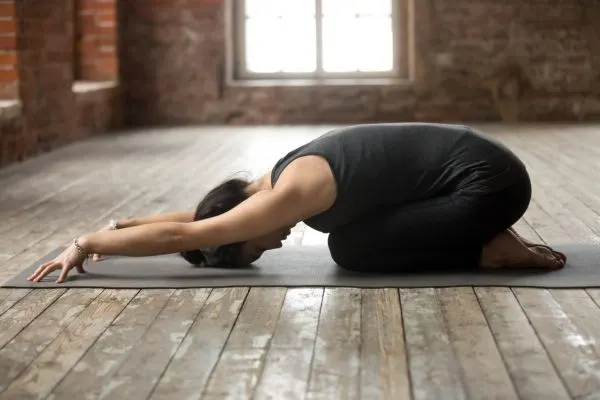
1. Child’s Pose (Balasana)
Child’s Pose is a deeply grounding posture that encourages surrender and emotional safety.
How to perform?
- Kneel on the floor.
- Sit back on your heels.
- Stretch your arms forward.
- Rest your forehead on the mat.
Duration: Hold for 1 to 3 minutes.
Stress-reducing benefits:
- Encourages deep breathing
- Relaxes the lower back
- Helps calm the nervous system
Many beginners start their yoga lower cortisol journey with this pose because it feels safe and comforting.
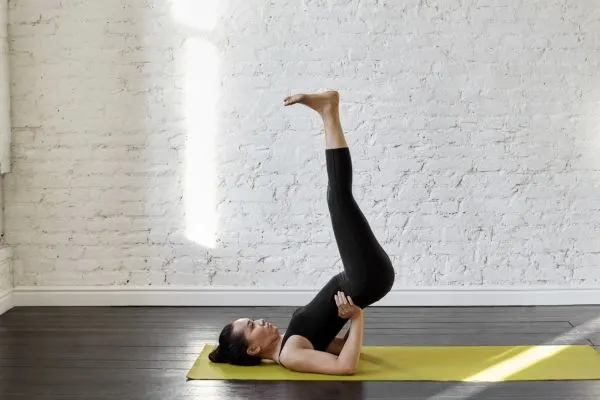
2. Legs-Up-The-Wall Pose (Viparita Karani)
This gentle pose promotes relaxation and circulation.
How to perform?
- Sit next to a wall.
- Lie on your back.
- Extend your legs upward against the wall.
Duration: Stay for 5 to 10 minutes.
Stress-reducing benefits:
- Reduces physical tension
- Encourages relaxation
- May help improve sleep quality
3. Corpse Pose (Savasana)
Despite its simple appearance, Savasana is one of the most powerful relaxation poses.
How to perform?
- Lie flat on your back.
- Let your arms rest comfortably.
- Close your eyes.
- Focus on your breathing.
Duration: 5 to 10 minutes.
Stress-reducing benefits:
- Encourages deep relaxation
- Helps slow the heart rate
- Supports mental calmness
Many yoga teachers consider Savasana essential for anyone using yoga to reduce cortisol.
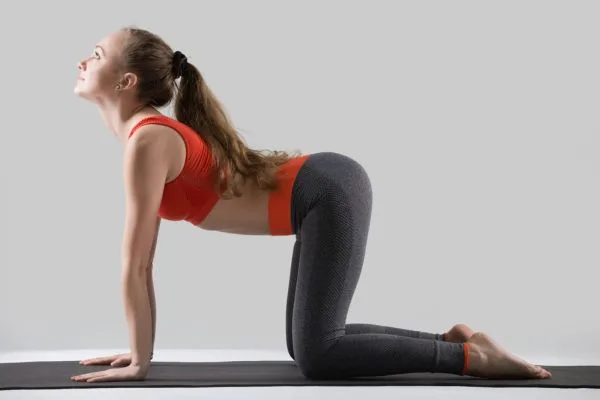
4. Cat-Cow Stretch
This gentle movement helps release tension throughout the spine.
How to perform?
- Start on your hands and knees.
- Arch your back while lifting your head.
- Round your spine while lowering your head.
- Repeat slowly.
Duration: 1 to 2 minutes.
Stress-reducing benefits:
- Improves mobility
- Encourages mindful breathing
- Releases tension stored in the back and neck
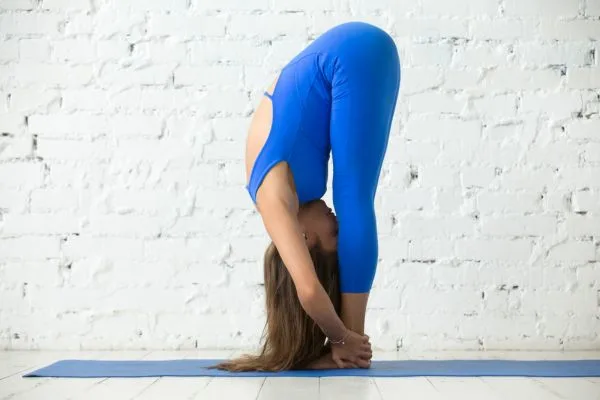
5. Standing Forward Fold
This pose helps stretch the back body and encourages relaxation.
How to perform?
- Stand with feet hip-width apart.
- Slowly bend forward from the hips.
- Let your arms hang naturally.
Duration: 30 seconds to 1 minute.
Stress-reducing benefits:
- Relaxes tight muscles
- Helps quiet the mind
- Encourages blood flow toward the head
6. Reclining Butterfly Pose
This restorative pose is excellent for relaxation.
How to perform?
- Lie on your back.
- Bring the soles of your feet together.
- Allow your knees to fall outward.
Duration: 3 to 5 minutes.
Stress-reducing benefits:
- Opens the hips
- Supports deep breathing
- Promotes relaxation
For many people, combining these poses creates an effective yoga routine that is easy to follow at home.
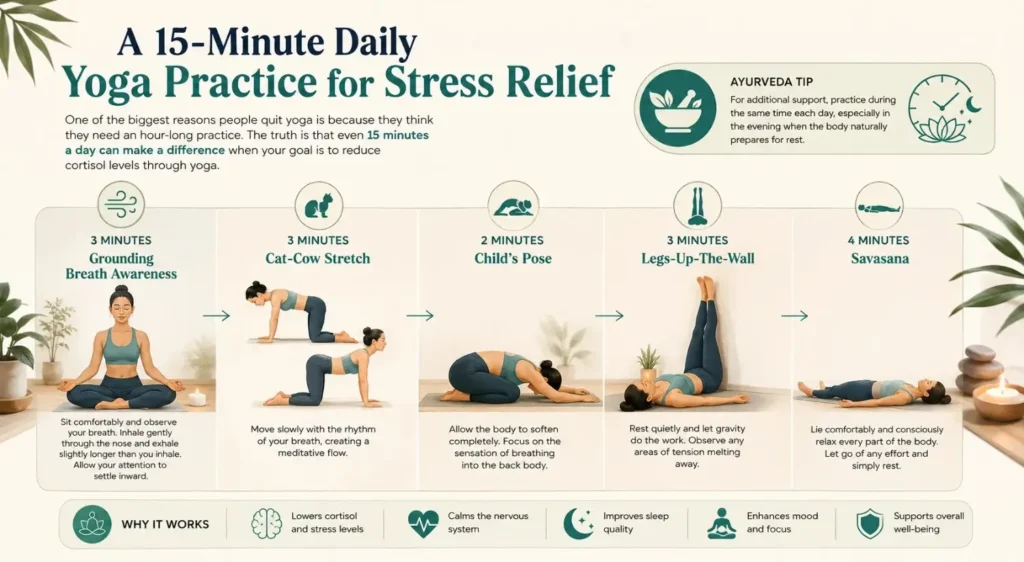
A 15-Minute Daily Yoga Practice for Stress Relief
One of the biggest reasons people quit yoga is because they think they need an hour-long practice.
The truth is that even 15 minutes a day can make a difference when your goal is to reduce cortisol levels through yoga.
a. 3 Minutes – Grounding Breath Awareness
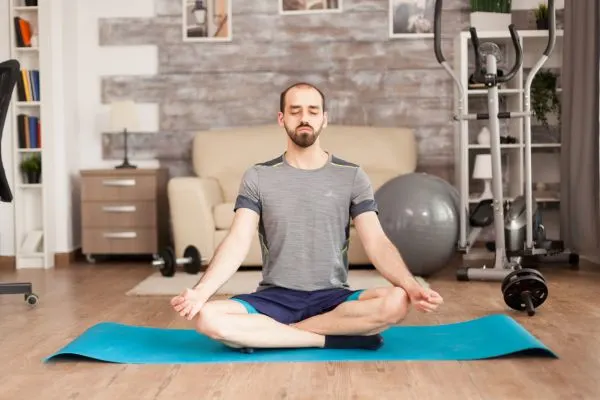
Sit comfortably and observe your breath.
Inhale gently through the nose and exhale slightly longer than you inhale. Allow your attention to settle inward.
b. 3 Minutes – Cat-Cow Stretch
Move slowly with the rhythm of your breath, creating a meditative flow.
c. 2 Minutes – Child’s Pose
Allow the body to soften completely. Focus on the sensation of breathing into the back body.
d. 3 Minutes – Legs-Up-The-Wall
Rest quietly and let gravity do the work. Observe any areas of tension melting away.
e. 4 Minutes – Savasana
Lie comfortably and consciously relax every part of the body. Let go of any effort and simply rest.
For additional support, Ayurveda recommends practicing during the same time each day, especially in the evening when the body naturally prepares for rest.
Common Mistakes That Prevent Stress Relief
a. Treating Yoga Like a Workout
Yoga is not merely about burning calories or improving flexibility. Its deepest benefits emerge when movement is combined with awareness.
b. Ignoring the Breath
Breath is the bridge between the body and mind. Without conscious breathing, many of yoga’s stress-relieving effects are diminished.
c. Constantly Chasing Advanced Poses
A performance-oriented mindset can create additional stress. The goal is not perfection but presence.
d. Skipping Relaxation
Many practitioners rush through Savasana, yet this is often where the nervous system receives its greatest opportunity to reset.
e. Being Inconsistent
A short daily practice is generally more beneficial than occasional intense sessions.
The Ayurvedic Connection: Supporting Ojas and Mental Well-being
Yoga becomes even more effective when paired with Ayurvedic lifestyle habits.
Consider:
- Maintaining consistent sleep and wake times
- Eating warm, nourishing meals
- Reducing excessive screen exposure before bedtime
- Practicing mindful breathing throughout the day
- Spending time in nature
- Creating moments of stillness and self-reflection
These habits help calm Vata, nourish Ojas, and strengthen the body’s natural resilience to stress.
Conclusion
Daily yoga is one of the simplest and most accessible tools for reducing stress and supporting healthier cortisol levels.
Through mindful movement, conscious breathing, and relaxation, yoga teaches the body how to move out of survival mode and into a state of balance.
From an Ayurvedic perspective, regular practice helps calm aggravated Vata, preserve Ojas, and promote emotional stability.
From a mental well-being perspective, it cultivates awareness, resilience, and a deeper sense of inner peace.
The true power of yoga lies not in performing complex postures but in consistently creating space to reconnect with yourself.
Even fifteen minutes a day can become a powerful ritual for restoring balance, improving stress resilience, and nurturing long-term well-being.
While yoga can be a valuable part of stress management, it is not a substitute for professional medical care.
If you experience persistent stress, anxiety, depression, or suspect an underlying health condition affecting your cortisol levels, seek help from a qualified healthcare or mental health professional for personalized guidance and the best possible care.
Frequently Asked Questions
1. Can yoga lower cortisol levels naturally?
Yes. Several studies suggest that regular yoga practice may help reduce stress and support healthier cortisol levels. Consistent practice is usually more effective than occasional sessions.
2. Which yoga reduces cortisol levels?
Gentle styles such as restorative yoga, yin yoga, and slow-flow yoga are often recommended for stress relief. Relaxation-focused poses may be especially helpful for people trying to lower cortisol naturally.
3. What do you crave when cortisol is high?
High cortisol levels are often linked to cravings for sugary, salty, or high-fat foods. Stress can increase appetite and encourage emotional eating in some people.
4. How often should I practice yoga to reduce cortisol?
Many experts recommend practicing at least 10 to 20 minutes daily. Consistency is usually more important than session length.
5. Does yoga help with anxiety and sleep problems?
Yes. Yoga may help calm the nervous system, reduce anxiety symptoms, and improve sleep quality. Better sleep can also support healthier cortisol patterns.
6. Is morning or evening yoga better for lowering cortisol?
Both can be beneficial. Morning yoga may help you start the day calmly, while evening yoga can help release tension and prepare the body for sleep.
7. Is yoga safe if I have a cortisol disorder like Cushing’s syndrome?
Yoga is generally considered safe for many people, but those with medical conditions such as Cushing’s syndrome should consult their healthcare provider before starting a new exercise program. A healthcare professional can recommend the safest approach based on individual needs.

Pradeep Mehta is the founder of Samsara Wellness and a certified Yog Acharya with over a decade of teaching experience. He is a Yoga Alliance-certified Hatha Yoga teacher and holds certifications in Laughter Yoga, AcroYoga, Thai Therapy, and Sound Healing. He has guided celebrities, athletes, corporates, and wellness enthusiasts toward holistic health and well-being.