Introduction
If you’re new to yoga and wondering where to start, here’s the short answer: yes, Hatha Yoga is one of the best styles for beginners.
It’s slow, gentle, and focused on the basics.
You won’t be rushed from one pose to the next. Instead, you get time to breathe, adjust, and actually learn what your body is doing.
So why is Hatha Yoga good for beginners?
A few reasons.
It moves at a relaxed pace.
It teaches proper alignment.
And it builds a strong foundation before you try harder styles like Vinyasa or Ashtanga.
Stress is a big reason people try yoga in the first place.
One national health survey found that 85% of people who practice yoga said it helped lower their stress levels.
That’s a strong reason to give it a shot, especially if your days feel a little chaotic.
Hatha Yoga doesn’t ask you to be flexible or fit. It just asks you to show up and breathe.
Beginner-Friendly Hatha Yoga Poses
Here are seven simple poses that are perfect for anyone just starting.
1. Tadasana (Mountain Pose)
This is the base of almost every standing pose.
You simply stand tall, feet grounded, shoulders relaxed.
Focus on your posture and steady breathing.
It sounds too simple to matter, but it teaches your body how to stand with balance and control.
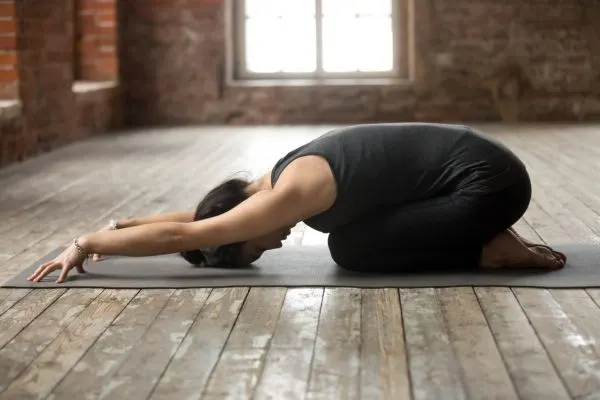
2. Balasana (Child’s Pose)
A resting pose that stretches your back and hips.
Kneel and fold forward with your arms stretched out or by your sides.
Beginners should focus on relaxing the shoulders and breathing deeply into the lower back.
3. Marjaryasana-Bitilasana (Cat-Cow)
This is a gentle flow between two positions on your hands and knees.
Arch your back on the inhale, round it on the exhale.
It’s great for waking up your spine and easing tension.
Focus on matching your movement to your breath.
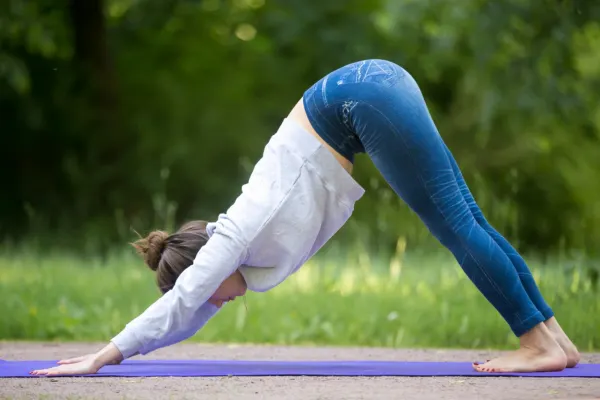
4. Adho Mukha Svanasana (Downward-Facing Dog)
A classic pose that stretches your hamstrings, calves, and shoulders.
Beginners often keep their knees slightly bent here, and that’s completely fine.
The goal isn’t a straight line.
The goal is a comfortable stretch.
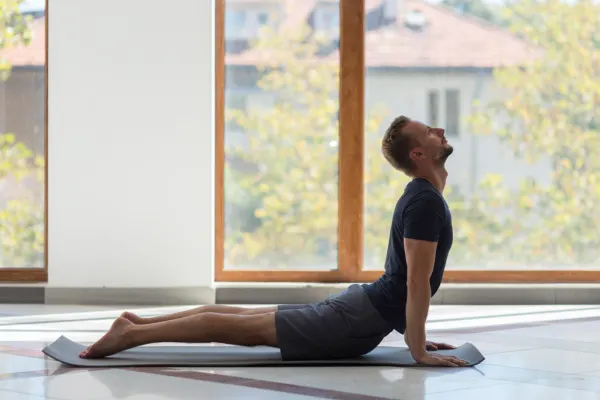
5. Bhujangasana (Cobra Pose)
A gentle backbend done lying on your stomach.
Press your palms down and lift your chest slightly.
Beginners should avoid pushing too high.
Small movements are enough to feel the stretch in your lower back.
6. Sukhasana (Easy Pose)
A simple cross-legged seated position, often used for breathing exercises or meditation.
Focus on sitting tall with a straight spine, not on how your legs are folded.
7. Savasana (Corpse Pose)
This final resting pose looks easy but matters a lot.
You lie flat on your back and let your whole body relax.
It helps your nervous system settle after practice.
Beginners should focus on stillness and slow breathing here.
Benefits of Hatha Yoga for Beginners
Here are five key benefits worth knowing about.
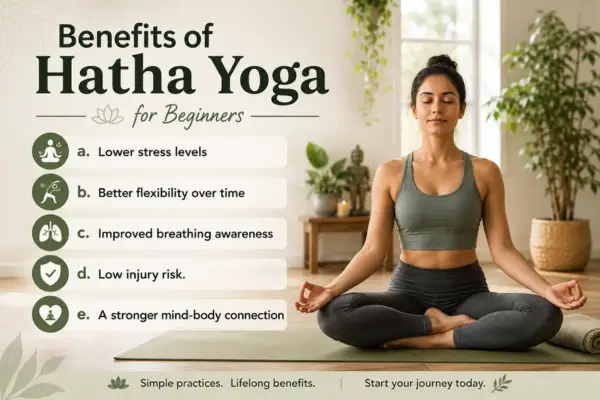
a. Lower stress levels. As mentioned earlier, a large portion of yoga practitioners report feeling less stressed after regular practice.
b. Better flexibility over time. You won’t become flexible overnight, but consistent practice slowly loosens tight muscles and joints.
c. Improved breathing awareness. Hatha Yoga puts a strong focus on breath control, which can help you feel calmer both on and off the mat.
d. Low injury risk. Because the pace is slow and controlled, Hatha Yoga carries a low injury rate compared to more intense workouts. Research points to an injury rate of roughly 0.60 per 1,000 hours of practice, which is quite low.
e. A stronger mind-body connection. One small study on Hatha Yoga found that after just 12 sessions, participants saw noticeable drops in stress, anxiety, and depression scores. That’s a meaningful result for something so gentle.
These benefits build up slowly. You won’t feel like a completely different person after one class, but stick with it and the changes tend to show up.
Also Read: Can Daily Yoga Reduce Cortisol Levels?
How Often Should Beginners Practice Hatha Yoga?
You don’t need to practice every day to see results. Here’s a simple approach that works well for most beginners.
a. Start with 2 to 3 sessions per week. This gives your body enough time to adjust without feeling overwhelmed.
b. Keep initial sessions manageable. A 20 to 30 minute session is plenty when you’re just starting.
c. Prioritize consistency over intensity. Showing up regularly matters more than pushing hard in a single class.
d. Allow time for recovery and adaptation. Your muscles and joints need rest days just like with any other physical activity.
e. Gradually increase practice as comfort improves. Once a few weeks have passed and things feel easier, you can add more sessions or extend your practice time.
Interestingly, one recent survey of yoga learners found that most preferred practicing around three days a week for 20 to 30 minutes at a time.
That lines up well with what most beginners naturally find sustainable.
Should Beginners Try Hatha Yoga?
If you’ve been on the fence, here’s the takeaway.
Hatha Yoga is one of the most accessible ways to start a yoga practice.
It’s slow enough for complete beginners, yet meaningful enough to build real strength, flexibility, and calm over time.
The goal at this stage isn’t to master advanced poses.
It’s to learn the fundamentals: how to breathe properly, how to hold a pose with good form, and how to listen to your body.
If you’re serious about starting, look for a beginner-level class near you.
A good instructor will guide you through the basics and correct your form, which makes a big difference early on.
Here’s the simple takeaway to remember: start slowly, focus on your breath, and build consistency.
That’s really all it takes to get going.
Frequently Asked Questions
1. Is Hatha Yoga easy for complete beginners?
Yes. It’s one of the gentlest styles of yoga, which makes it a natural starting point for people with no experience at all.
2. How long should a beginner practice Hatha Yoga?
Around 20 to 30 minutes per session is a good starting point. You can increase the time as you get more comfortable.
3. Can I do Hatha Yoga if I’m not flexible?
Absolutely. Flexibility isn’t a requirement to start. In fact, regular practice is one of the best ways to build flexibility over time.
4. What should I wear for Hatha Yoga?
Comfortable, breathable clothing that allows you to move freely works best. Avoid anything too tight or restrictive.
5. How many days a week should beginners do Hatha Yoga?
Two to three sessions a week is a solid starting routine for most beginners.
6. Is Hatha Yoga better than Vinyasa for beginners?
For most beginners, yes. Hatha Yoga moves slower and gives you more time to learn proper form, while Vinyasa flows quickly between poses and can feel overwhelming at first.

Pradeep Mehta is the founder of Samsara Wellness and a certified Yog Acharya with over a decade of teaching experience. He is a Yoga Alliance-certified Hatha Yoga teacher and holds certifications in Laughter Yoga, AcroYoga, Thai Therapy, and Sound Healing. He has guided celebrities, athletes, corporates, and wellness enthusiasts toward holistic health and well-being.