Summary

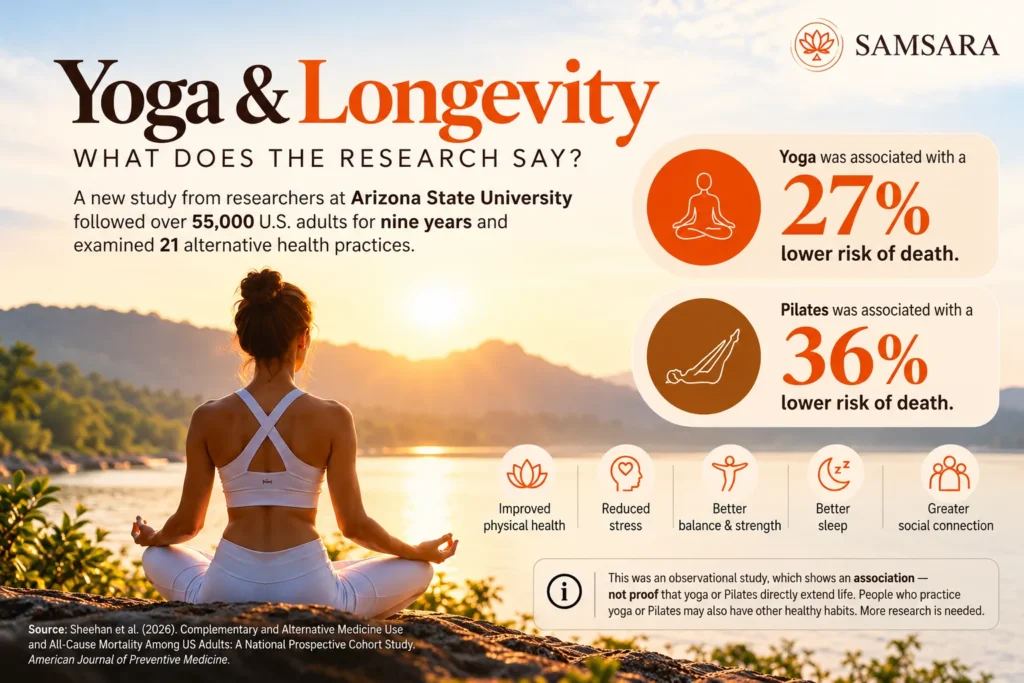
A new 2026 study involving 55,023 U.S. adults found that **Yoga and Longevity** may be linked, with yoga associated with a 27% lower risk of all-cause mortality, while Pilates was associated with a 36% lower risk. However, because the research was observational, it does not prove that yoga directly increases lifespan. Yoga combines movement, strength, balance, flexibility, breathwork, relaxation and mindfulness, making it a valuable part of a holistic approach to healthy ageing and long-term wellbeing.
Introduction
Yoga has traditionally been associated with flexibility, strength, balance, breathing, and mental well-being.
But could its benefits extend beyond how we feel today and potentially be connected with how long we live?
A new 2026 study published in the American Journal of Preventive Medicine adds an interesting piece of evidence to the conversation about yoga and longevity.
Researchers examined data from 55,023 U.S. adults and followed mortality outcomes through 2019.
They looked at 21 different complementary and alternative medicine practices and examined whether participation was associated with all-cause mortality. ScienceDirect
One finding stood out:
Yoga was associated with a 27% lower risk of death.
Pilates was also associated with a lower risk, at 36%.
But there is an important scientific distinction: the study does not prove that yoga causes people to live longer.
That distinction matters.
What Did the Yoga and Longevity Study Find?
The research, titled “Complementary and Alternative Medicine Use and All-Cause Mortality Among US Adults: A National Prospective Cohort Study,” was conducted using data from the U.S. National Health Interview Survey.
The researchers analyzed 55,023 adults from the 2007 and 2012 survey waves and linked their information to mortality records through 2019.
During the follow-up period, there were 5,530 deaths in the study population. ScienceDirect
The researchers examined 21 different complementary and alternative medicine practices.
After statistical adjustment and correction for multiple comparisons, yoga and Pilates showed the strongest inverse associations with mortality among the individual practices studied.
For yoga, the reported hazard ratio was 0.73, corresponding to an association with approximately 27% lower all-cause mortality risk.
For Pilates, the hazard ratio was 0.64, corresponding to approximately 36% lower risk. PubMed
The findings are particularly interesting because yoga combines several dimensions of health rather than focusing exclusively on physical exercise.
Why Might Yoga Be Associated With Healthy Ageing?
The researchers suggest several possible explanations.
Yoga is not simply a stretching practice. Depending on the style and approach, it can involve:
- Physical movement
- Strength and muscular endurance
- Balance and coordination
- Flexibility and mobility
- Breathwork
- Relaxation and stress management
- Mind-body awareness
- Social connection when practiced in a group
Arizona State University researcher Connor Sheehan noted that yoga and Pilates are forms of physical activity while also incorporating elements such as balance, breathwork and stress management.
Group practice may also provide a social component. ASU News
These characteristics make yoga particularly interesting when we think about healthy ageing.
As we grow older, maintaining strength, mobility, balance and the ability to manage stress becomes increasingly important.
Yoga can provide a framework for working on several of these areas together.
However, it is important not to turn these possible explanations into claims that the study itself proved.
Does Yoga Actually Make You Live Longer?
We don’t know yet.
This is probably the most important message from the study.
The research was observational.
Researchers identified an association between yoga participation and lower mortality, but they did not randomly assign people to practice yoga and then compare their outcomes with a control group.
Therefore, the study cannot establish that yoga itself caused the difference.
For example, people who practice yoga may also be more likely to:
- Exercise regularly
- Eat a healthier diet
- Sleep better
- Avoid smoking
- Have higher education or income
- Have better access to healthcare
- Take a more proactive approach to their health
The researchers adjusted for a number of demographic and health-related factors, including income, education, exercise, smoking, BMI, and self-rated health.
But, as with other observational research, unmeasured or residual differences between groups can remain. ASU News
In other words:
The research shows a relationship, not a cause-and-effect conclusion.
That is why the scientifically accurate statement is:
“Yoga was associated with a 27% lower risk of death.”
Not:
“Yoga reduces your risk of death by 27%.”
Yoga Is More Than Flexibility
For many people, yoga begins with a physical goal.
- Better flexibility.
- Less stiffness.
- Improved posture.
- Greater strength.
- Better balance.
But a traditional yoga practice can encompass much more than physical movement.
The integration of asana, breath awareness, concentration, relaxation and mindfulness can make yoga a broader mind-body practice.
This is particularly relevant when considering long-term wellbeing.
Healthy ageing isn’t simply about adding years to life. It is also about maintaining the physical and mental capacities that allow us to participate meaningfully in everyday life.
- Being able to move comfortably.
- Maintaining balance.
- Building strength.
- Managing stress.
- Staying socially connected.
Developing greater awareness of the body and mind.
These are all valuable components of a holistic approach to wellbeing.
What Does This Mean for Yoga Practitioners?
The study should not be interpreted as a prescription to practice yoga to prevent death.
Instead, it provides another reason to take a closer look at yoga as part of a healthy lifestyle.
The researchers themselves say further investigation is needed to determine whether the association reflects specific effects of yoga and Pilates, the role of physical activity, or the characteristics of people who choose these practices. ScienceDirect
Future research, including stronger study designs, could help answer an important question:
Does yoga itself contribute to longevity, or is yoga partly a marker of a broader healthy lifestyle?
We need more evidence before we can answer that confidently.
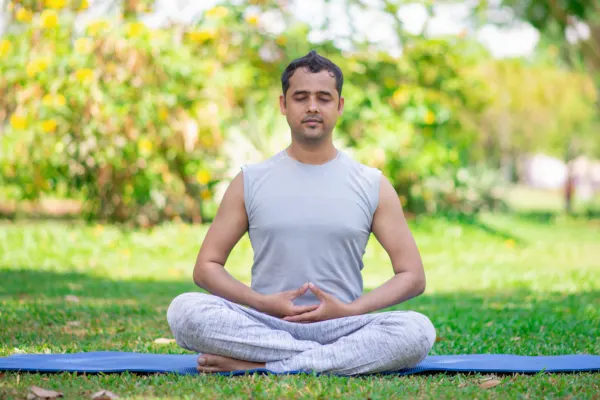
A More Holistic View of Yoga and Wellness
At Samsara Wellness, we believe yoga should not be reduced to calories burned, flexibility scores, or the number of difficult poses someone can perform.
Yoga can be part of a broader approach to wellbeing that considers the body, mind, and lifestyle together.
That philosophy aligns with a growing interest in preventive and holistic wellness, combining movement with practices that support mental wellbeing, awareness, recovery, and sustainable healthy habits.
The emerging research on yoga and longevity is interesting precisely because it encourages us to look beyond yoga as simply a form of exercise.
It invites a bigger question:
What happens when movement, breath, awareness,s and healthy living become part of everyday life?
We don’t have every answer yet.
But the research is giving us more questions worth exploring.
The Takeaway
A large U.S. prospective cohort study involving 55,023 adults found that yoga was associated with a 27% lower risk of all-cause mortality, while Pilates was associated with a 36% lower risk. ScienceDirect
That does not mean yoga has been proven to extend lifespan.
But it does add to the scientific conversation around:
Yoga + Movement + Mindfulness + Healthy Ageing
For anyone already practicing yoga, the message is encouraging.
And for those who haven’t started, perhaps the goal doesn’t need to be doing the perfect pose.
It can simply be:
- Move more.
- Breathe better.
- Be more aware.
- Build sustainable habits.
- Age consciously.
Ancient Wisdom. Modern Intelligence.
Also Read: Corporate Wellness Programs Every HR Team Should Consider
Read the Original Research
Original research paper:
American Journal of Preventive Medicine — Original Research
DOI: 10.1016/j.amepre.2026.108461 PubMed
Research summary and researcher interview:
Arizona State University — Yoga and Pilates associated with longer lifespans
Frequently Asked Questions
1. Can yoga help you live longer?
Research suggests that yoga may be associated with a lower risk of mortality. A 2026 study found that people who practiced yoga had a 27% lower risk of death. However, the study was observational and does not prove that yoga directly causes people to live longer.
2. What did the 2026 yoga and longevity study find?
The study analyzed 55,023 U.S. adults and found that yoga was associated with a 27% lower risk of all-cause mortality. Pilates showed an even stronger association, with a 36% lower risk.
3. Why might yoga be beneficial for healthy ageing?
Yoga combines physical movement, strength, flexibility, balance, breathing, relaxation, and mindfulness. These elements may support physical and mental wellbeing and help people maintain mobility and manage stress as they age.
4. Does practicing yoga reduce the risk of death by 27%?
Not necessarily. The study found an association, not a cause-and-effect relationship. People who practice yoga may also have healthier lifestyles, exercise more, eat better, or have better access to healthcare, which could influence the results.
5. How can yoga support overall wellbeing and healthy ageing?
Yoga can be part of a holistic wellness routine that supports mobility, strength, balance, stress management, mindfulness and body awareness. Combined with other healthy lifestyle habits, it may contribute to overall wellbeing and healthy ageing.

Samsara Wellness is a holistic wellness platform bringing together Yoga, Ayurveda and Mental Wellbeing through technology, expert-led practices and accessible wellness experiences.
Explore a more integrated approach to your wellbeing with Samsara Wellness.