
SUMMARY

Sciatica occurs when the sciatic nerve is irritated or compressed, causing pain, tingling, numbness, or weakness that can travel from the lower back down the leg. Gentle yoga may help improve mobility, reduce stiffness, and manage symptoms for some people. Helpful poses include Child’s Pose, Cat-Cow, Supine Figure-Four, Sphinx Pose, Low Lunge, Reclined Hand-to-Big-Toe Pose, and Bridge Pose. However, yoga is not a cure and certain movements may worsen symptoms. Stop if pain, numbness, or weakness increases. Seek medical attention for severe weakness, progressive numbness, bladder or bowel problems, or groin numbness.
If you’ve ever felt a sharp pain shoot from your lower back down your leg, you already know how much sciatica can disrupt your day.
The good news is that certain yoga poses for sciatica may help you move more freely and feel less stiff.
Sciatica happens when the sciatic nerve, which runs from your lower back through your hips and down each leg, gets irritated or squeezed.
This can cause pain, tingling, numbness, or weakness that travels along that path.
What Causes Sciatica?
A few common culprits include:
- A herniated or bulging disc pressing on the nerve
- Spinal stenosis (narrowing of the spine)
- Muscle tightness, especially in the piriformis muscle near the hip
- Prolonged sitting or poor posture
Symptoms can range from a dull ache to a sharp, burning pain.
Some people also feel numbness or a pins-and-needles sensation running down one leg.
Gentle movement and stretching may help some people manage these symptoms.
In fact, research suggests sciatica affects somewhere between 13 and 40 percent of people at some point in their lives, which makes it one of the more common nerve pain issues out there.
Still, yoga isn’t a cure-all.
It may help with mobility and comfort, but it isn’t right for every case, especially more serious ones.
The right yoga poses can help you move more comfortably. But the wrong movements may aggravate irritated nerves.
That’s why going slow and listening to your body matters.
Pose 1: Child’s Pose (Balasana)
This gentle resting pose stretches your lower back and hips.
How to do it:
- Kneel on the floor with your big toes touching
- Sit back on your heels and stretch your arms forward
- Rest your forehead on the mat and breathe slowly
Hold for 30 seconds to 1 minute.
Beginners can place a pillow under their hips for extra support.
Safety tip: Stop if it increases radiating leg pain or numbness.
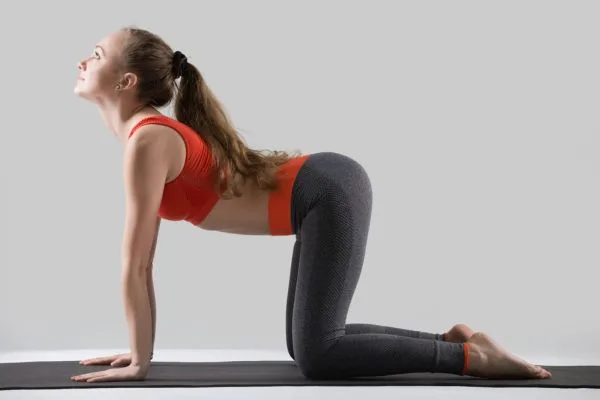
Pose 2: Cat-Cow Pose (Marjaryasana-Bitilasana)
This pose gently moves your spine and can ease stiffness.
Start on your hands and knees.
As you inhale, drop your belly and lift your chest (cow).
As you exhale, round your spine and tuck your chin (cat).
Repeat slowly for 8 to 10 rounds, matching your breath to the movement.
Beginners can keep the movements small. If you feel sharp pain, reduce the range of motion or stop.
Pose 3: Supine Figure-Four Stretch
This stretch targets tight hips and glutes, which often contribute to sciatic pain.
Steps:
- Lie on your back with knees bent
- Cross your right ankle over your left knee
- Gently pull your left thigh toward your chest
Hold for 20 to 30 seconds, then switch sides.
If it’s too intense, loop a strap or towel around your thigh instead of using your hands.
Common mistake: pulling too hard or too fast. Ease into it slowly.
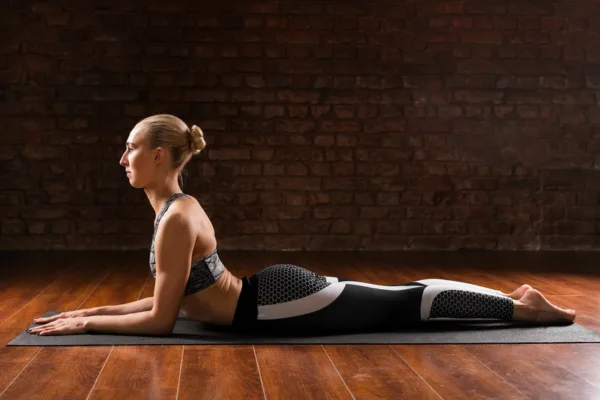
Pose 4: Sphinx Pose (Salamba Bhujangasana)
This pose gently extends your spine and can relieve pressure on the lower back.
Lie on your stomach and prop yourself up on your forearms, elbows under your shoulders.
Keep your hips grounded and relax your shoulders.
Hold for 30 seconds to 1 minute.
You can lower onto your elbows more or less to adjust intensity.
People with certain spine conditions may need to avoid this pose, so check with a doctor first if you’re unsure.
Pose 5: Low Lunge (Anjaneyasana)
This pose opens tight hip flexors, which can pull on the lower back.
Steps:
- Step your right foot forward into a lunge
- Lower your back knee to the floor
- Keep your pelvis tucked slightly and spine tall
Hold for 20 to 30 seconds per side.
Beginners can place a folded blanket under the back knee for comfort.
Pose 6: Reclined Hand-to-Big-Toe Pose (Supta Padangusthasana)
This pose gently stretches tight hamstrings, which can worsen sciatic discomfort.
Lie on your back and loop a yoga strap around one foot.
Slowly straighten that leg toward the ceiling, keeping the other leg flat.
Hold for 20 to 30 seconds per side. Don’t force your leg fully straight.
If your hamstrings are tight, keep a slight bend in the knee.
Pose 7: Bridge Pose (Setu Bandhasana)
This pose gently strengthens your glutes and lower back muscles.
Steps:
- Lie on your back with knees bent, feet flat
- Press through your feet and lift your hips
- Squeeze your glutes gently at the top
Hold for a few breaths, then lower slowly.
Beginners can place a yoga block under the hips instead of holding the lift.
Common mistakes include arching the lower back too much or lifting too high.
Stop if you feel pinching or sharp pain.

When Should You Stop Yoga and See a Doctor?
Yoga poses for sciatica can offer relief for many people, but some symptoms need prompt medical attention.
Please see a doctor right away if you experience:
- Significant or worsening leg weakness
- Severe or progressive numbness
- Loss of bladder or bowel control
- Numbness around the groin or inner thigh area
- Severe symptoms following a fall or injury
- Symptoms that keep getting worse or stop you from doing daily tasks
These signs can point to something more serious, and waiting too long could make things harder to treat.
Conclusion
Gentle, appropriate movement can be a real help for some people dealing with sciatica.
These yoga poses for sciatica are a good starting point, but everyone’s body responds differently.
What works well for one person might not work for another, so it helps to pay attention to how you feel and adjust as needed.
Understanding the root cause of your pain matters too.
If you’re unsure which movements are appropriate for your symptoms, speak with a qualified healthcare professional or physical therapist before starting a new yoga routine.
Also Read: Best Yoga Poses for Lower Back Pain
Frequently Asked Questions
1. Can yoga cure sciatica?
No. Yoga may ease symptoms and improve mobility, but it doesn’t cure the underlying cause. A study funded by the National Institutes of Health found that people with chronic low back pain who did yoga had outcomes similar to those who did physical therapy, and were more likely to stop needing pain medication after a year.
2. Which yoga pose is best for sciatica?
There’s no single best pose. Many people find relief with gentle hip openers like the Supine Figure-Four Stretch, but the right pose depends on your specific symptoms.
3. Is it okay to do yoga when sciatica is painful?
Gentle movement can sometimes help, but avoid anything that increases pain or numbness. If a pose hurts, stop right away.
4. How often should I do yoga for sciatica?
Many people practice a few times a week, but it’s best to start slow and see how your body responds.
5. Should I stretch my hamstrings if I have sciatica?
Gentle hamstring stretches can help some people, but avoid forcing the stretch. Tight hamstrings can sometimes worsen nerve irritation if pushed too hard.
6. Can beginners do yoga for sciatica?
Yes, with modifications. Using props like blocks, straps, and pillows can make poses safer and more comfortable for beginners.
7. When should I stop exercising with sciatica?
Stop immediately if you notice increasing numbness, weakness, or sharp radiating pain, and speak with a healthcare provider.

Pradeep Mehta is the founder of Samsara Wellness and a certified Yog Acharya with over a decade of teaching experience. He is a Yoga Alliance-certified Hatha Yoga teacher and holds certifications in Laughter Yoga, AcroYoga, Thai Therapy, and Sound Healing. He has guided celebrities, athletes, corporates, and wellness enthusiasts toward holistic health and well-being.